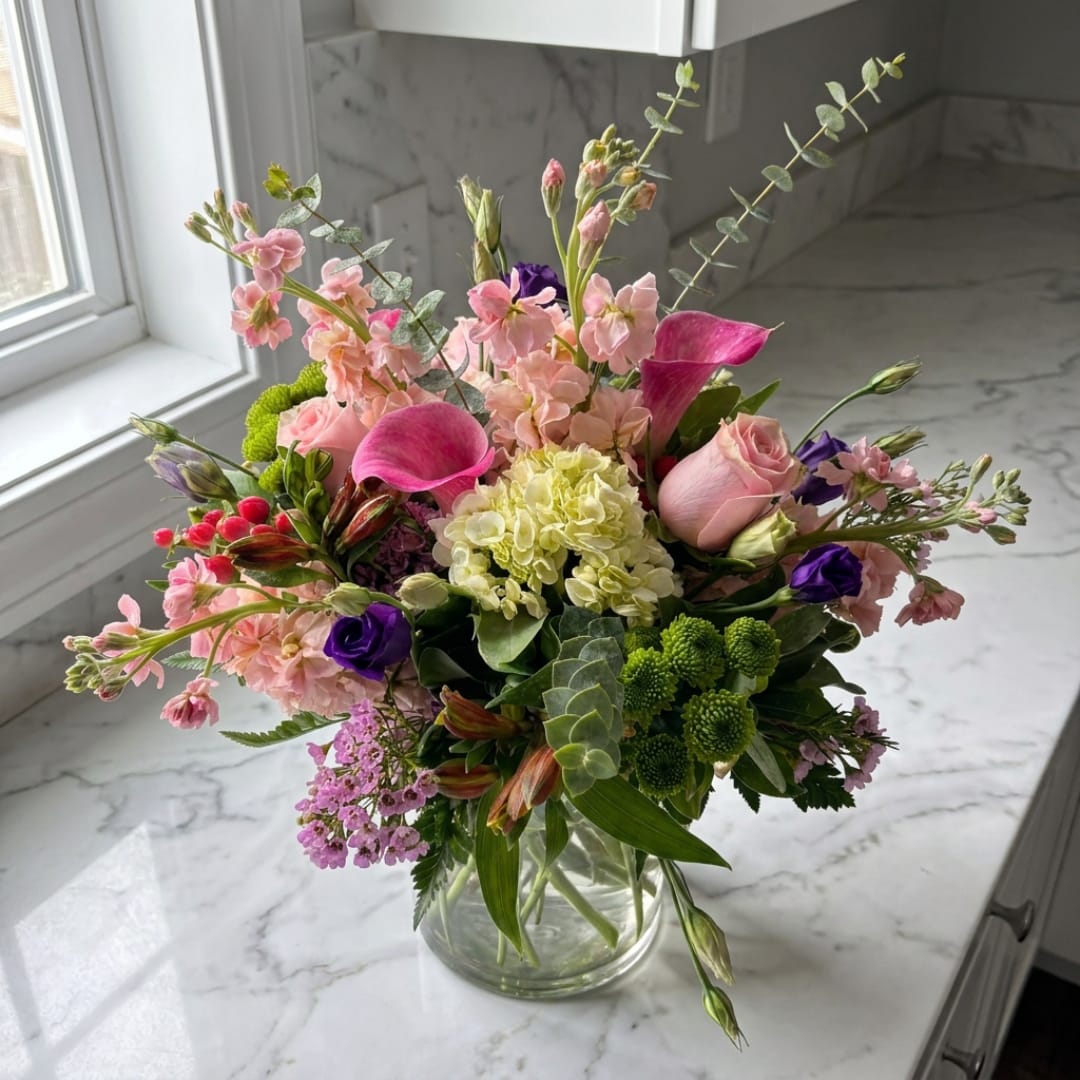
Fresh flowers bring beauty, color, and life into any home. But if you share your space with a curious cat or playful dog, choosing the right blooms is about more than appearance. Some popular cut flowers can be toxic to pets, making it important to know which varieties to avoid and which alternatives are safer.
Flowers That Can Be Dangerous to Pets
Not every beautiful bloom is pet-friendly. Some flowers contain natural compounds that can cause serious illness if chewed or swallowed.
Lilies: True lilies, including Easter, Asiatic, and Stargazer lilies, are extremely toxic to cats. Even small exposures to pollen, leaves, or flower petals can cause life-threatening kidney failure. Drinking water from a vase containing true lilies may also be dangerous. If you have cats, the safest choice is to keep true lilies out of your home entirely.
Tulips: Tulips contain toxic compounds concentrated in their bulbs, although other parts of the plant can also cause illness. If ingested, they may cause drooling, vomiting, and diarrhea in dogs and cats.
Hydrangeas: Hydrangeas contain compounds that can release cyanide when ingested. Significant exposure can cause vomiting, diarrhea, and, in severe cases, more serious symptoms.
When selecting flowers for your home, remember that a bouquet can contain multiple varieties of flowers and greenery. Always check the safety of the entire arrangement, not just its most noticeable blooms.
Pet-Friendlier Flowers to Consider
You don't have to give up fresh flowers to create a more pet-conscious home. Several popular varieties are generally considered non-toxic to cats and dogs.
Roses: A timeless favorite for romantic bouquets, thoughtful gifts, and everyday arrangements. Remove thorns when appropriate, since they can cause physical injuries.
Sunflowers: Bright, cheerful blooms that add a warm touch to any room.
Snapdragons: Colorful, elegant flowers that bring height and texture to an arrangement.
Freesias: Fragrant, delicate blooms that complement both classic and modern designs.
For greenery, Boston ferns are generally considered non-toxic to cats and dogs. Leatherleaf fern is also commonly listed as non-toxic, but plant identification matters because not every plant called a fern is pet-safe.
Even non-toxic flowers can cause mild stomach upset if pets eat them. Pesticides, floral preservatives, thorns, and other arrangement materials can also pose risks, so it's best to discourage pets from chewing on bouquets.
Tips for Keeping Flowers and Pets Safe
A few simple precautions can help you enjoy fresh flowers while protecting your furry family members.
1.Know your flowers. Check the names of the flowers and greenery in an arrangement before bringing it home.
2.Choose placement carefully. Keep bouquets away from curious pets, especially cats that can jump onto counters and tables.
3.Don't overlook vase water. It may contain plant material, bacteria, or floral preservatives. Keep pets from drinking it.
4.Tell your florist about your pets. Ask for an arrangement made with flowers and greenery selected for your household's needs.
5.Act quickly after a suspected exposure. If your pet chews or ingests a potentially toxic flower, contact your veterinarian or an animal poison control service immediately. For suspected true lily exposure in cats, do not wait for symptoms to appear.
Beautiful Blooms With Your Pets in Mind
Flowers should bring happiness into your home, not unnecessary worry. With thoughtful flower selection and a few simple precautions, you can enjoy fresh arrangements while keeping your four-legged family members in mind.
At
Exceptional Flowers & Gifts, we believe every arrangement should feel special. If you have pets at home, let us know when placing your order so we can discuss suitable flower options and help you choose a more pet-conscious design.
Exceptional Flowers & Gifts
Beautiful flowers for life's meaningful moments.